Project Cuttlefish - Playtest Notes (Winter 2026)
-
Inserted this into the broader campaign world / narrative framework of The Abyssal Archive, which is a weird fantasy episodic table using the Pathfinder 1e ruleset; Cuttlefish was originally written as an adventure for this group
-
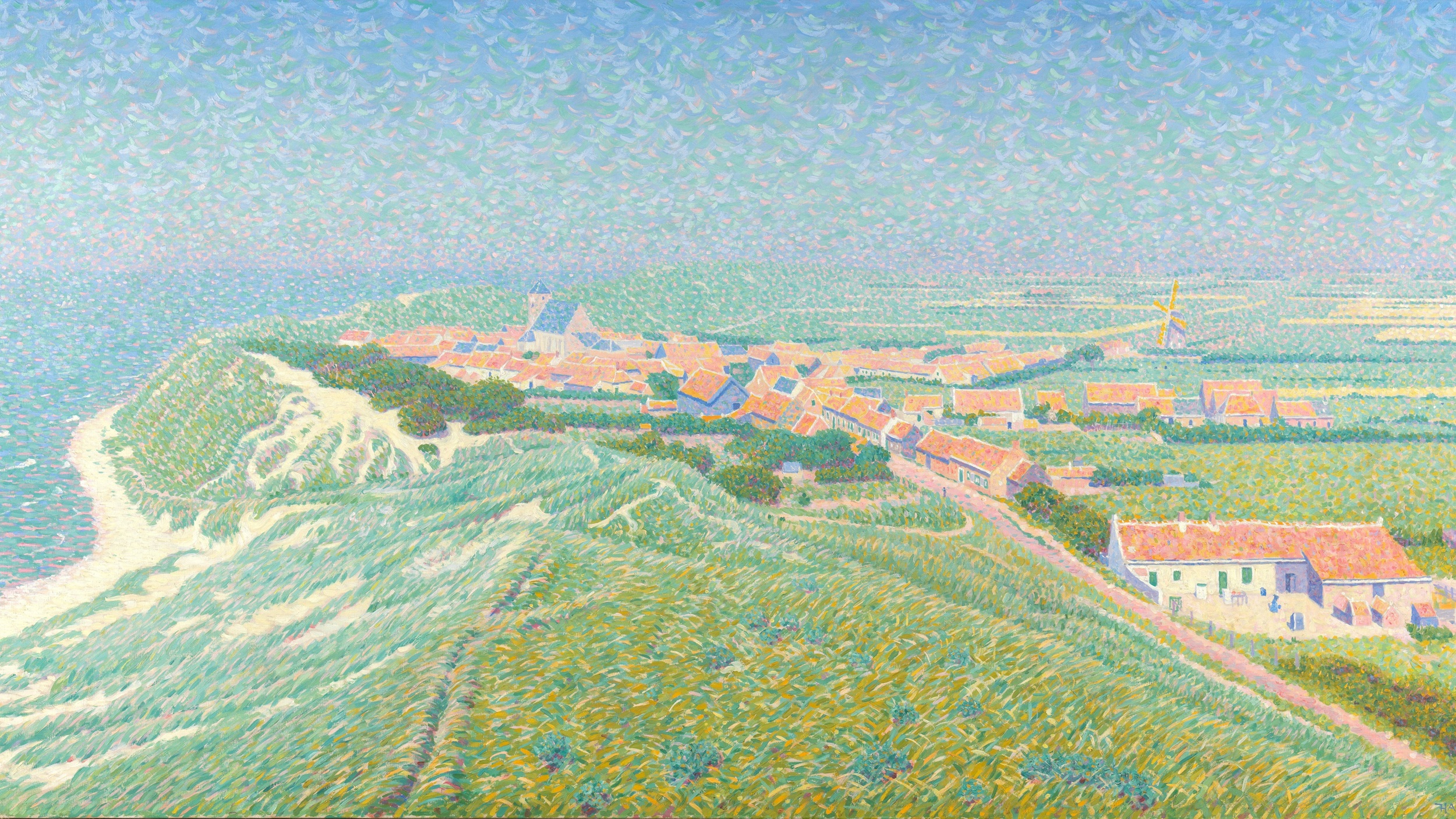
The opening hook (you step through a portal and find yourself falling out of the clear blue sky towards a beautiful turquoise sea below) is probably not the right hook to run this as a standalone adventure, for a few reasons. Even with the pre-existing context of an episodic adventuring campaign, it didn't give the party enough insight into what the world was all about.
- I think in packaging this up as a standalone thing, it should be more explicit why the party is here, and what it is they're supposed to do. I wound up having the party's patron freeze time after their first time loop to give them essentially a scaffold for how to succeed at the adventure going forward (more on that in the next bullet)
-
Scaffolding the party much more explicitly is probably a good idea; the first loop I think was fun and interesting to explore the world without knowing what they were looking for or trying to do, but I think it dragged as a result. If I were to write in a more explicit scaffold, here's where I should explore:
- The Sprawl is super explicit about mission objectives / win conditions. It's likely helpful to expose the 'meta' to the players even if their characters may not know — i.e., you need to find X pieces of evidence, you need to present them to the local Council of Justice, etc.
- The ideal structure is to figure out how to let this unfold progressively; perhaps it's giving them one set of objectives for the first loop ("explore the town and figure out what's driving the negative resonances"), then find a really smooth on-ramp to evidence collection in the second loop while introducing the Council of Justice as a set of powerbrokers who can resolve the adventure for them, then use the Council of Justice to give new objectives once they've got the evidence in hand (secure the telegraph station, send telegraph, prevent the mayor from escaping in a boat, etc.).
- The intersection of Map, Cast of Characters, and Calendar is a potentially fun mechanic, especially if you were to make it physical — perhaps using tokens of some kind to represent different characters and where they'll be at different times in the Calendar
- Making explicit the increments of the Calendar also may help to make it clearer what the game actually is: map the time-bound and time-independent pieces of evidence to the Calendar, so you can gather them in the right order on each run before the timeloops break down and you lose
- OMG I have not yet put together that this is a Rogue-like ???? Wow. Caves of Qud and Hades shining through way more than I realized!
- Making explicit the increments of the Calendar also may help to make it clearer what the game actually is: map the time-bound and time-independent pieces of evidence to the Calendar, so you can gather them in the right order on each run before the timeloops break down and you lose
- I also like some of the things that Blades in the Dark does in terms of the Crew scaffolding -- the little flowchart-y maps for assets you can collect in a certain order
- The Sprawl is super explicit about mission objectives / win conditions. It's likely helpful to expose the 'meta' to the players even if their characters may not know — i.e., you need to find X pieces of evidence, you need to present them to the local Council of Justice, etc.
-
At the time of writing, we're still partway through a playthrough (more on that below), and I'm having trouble figuring out how to layer in what are really my favourite parts of the whole thing: the time loops, the fact that everyone is a construct in a living, breathing, broken museum diorama, and the Hooded Stranger (who lived in the real Porto-Porto at the time of these events and somehow achieved agelessness -- is he maybe the architect of the whole thing?)
- It takes it from a straightforward mystery-type game with a weird timeloop mechanic and gives that blend of things narrative grounding, but also I think it's sort of an ethereal thing to nail down. Like, when do you introduce that guy? How do you do it such that it feels like an "aha" rather than a "wtf"?
-
We've been playing on and off since maybe December? And it feels a bit slow. I think in an ideal world you wouldn't play this with the dice-heavy and more simulationist scaffolding of Pathfinder -- something rules-light(er) plus less of a "we do this and then we do this and then we do this" approach to navigating the world would work better. I wonder if leaning more heavily on the Map/Cast/Calendar scaffold would help the group to pick scenes they want to play, and then find a way to resolve the action in those scenes more quickly -- Blades in the Dark's resolution rolls come to mind as something that can advance the action in a scene in a whole bunch of ways that aren't tit-for-tat discrete-action rolls
- This raises a question though: if this gets published at some point to the world, do you position it as a) a standalone game with its own little ruleset, or b) an adventure that can slot into other game types and styles? To what extent do you impose mechanics that interfere with the broader mechanical gears of a table (as opposed to smaller adventure-specific mechanics that are the equivalent of a 'mini-game' in a video game and which don't change how the party moves through their game more broadly). There are trade-offs here, of course -- more opinionated on ruleset = better experience; less opinionated = easier to slot into another game
- Another thought on this thread: there's a distinction that seems to be common practice between 'ruleset / system' on the one hand, and 'adventure / scenario' on the other. Ruleset prioritizes broader mechanics for play and replayability or perpetual play at the table, whereas adventure prioritizes a specific and finite set of narrative stakes and mechanisms and relationships but doesn't tinker too much at the higher level. If you specify strongly-opinionated 'operating system' rules for a finite narrative, have you made something other than TTRPG? Is it closer to a board game?
- This feels akin, in some ways, to watching a play 10x (even one with lots of improvisation) vs. going to an improv show 10x -- one has much more 'replayability' than the other
- Another thought on this thread: there's a distinction that seems to be common practice between 'ruleset / system' on the one hand, and 'adventure / scenario' on the other. Ruleset prioritizes broader mechanics for play and replayability or perpetual play at the table, whereas adventure prioritizes a specific and finite set of narrative stakes and mechanisms and relationships but doesn't tinker too much at the higher level. If you specify strongly-opinionated 'operating system' rules for a finite narrative, have you made something other than TTRPG? Is it closer to a board game?
- This raises a question though: if this gets published at some point to the world, do you position it as a) a standalone game with its own little ruleset, or b) an adventure that can slot into other game types and styles? To what extent do you impose mechanics that interfere with the broader mechanical gears of a table (as opposed to smaller adventure-specific mechanics that are the equivalent of a 'mini-game' in a video game and which don't change how the party moves through their game more broadly). There are trade-offs here, of course -- more opinionated on ruleset = better experience; less opinionated = easier to slot into another game
-
Seeing the world come to life is a real pleasure, and I think the players seem into it as well. There's lots of meat to chew on, in terms of politics that feel both relevant (yikes) and also familiar in their original context (we've all been raised on media ruminating on mid-century fascism, to a degree), plus anchoring it (like Porco Rosso does!) in a sumptuous European-ish archipelago leaves lots of room to balance the politics with beauty and richness in terms of architecture, food, music, landscape, etc.